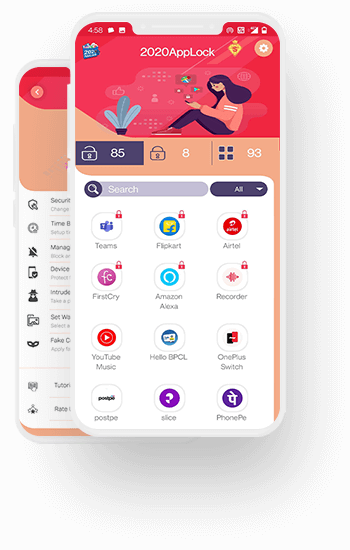
Advanced & Secure
Easy to Lock & Unlock Apps
Ultimate Solution for Privacy on Android
Advanced & Secure
Easy to Lock & Unlock Apps
Ultimate Solution for Privacy on Android
2020AppLock - #1 app lock that allows you to lock apps and protect your privacy using multiple lock types - Pattern, PIN and Fingerprint. 2020AppLock is the best advanced protection 2020AppLock with notification control management. You can easily lock and unlock apps including Facebook, Instagram, WhatsApp, Snapchat, Contacts, Gallery, Messenger, SMS, Gmail, YouTube, Settings, etc. on your Android Device with one tap. The application locker protects your app and data even when your device is shared with others.
Everyone has a lot of sensitive information in the applications installed on their smart device (mobile, tablet, phablet, etc.). We store pictures, documents, messages and other personal information in them. And it is important to have an app protector as we share our device with others for many reasons. 2020Applock, the application locker protects your data even when your device is shared with others.
UnfoldLabs Inc. has developed a great anti-intrusion tool for you. You can prevent unauthorized access to your devices, ensure app security and maintain privacy. Download the best Security Lock - App Locker (2020AppLock) to be your Smartphone privacy guard!
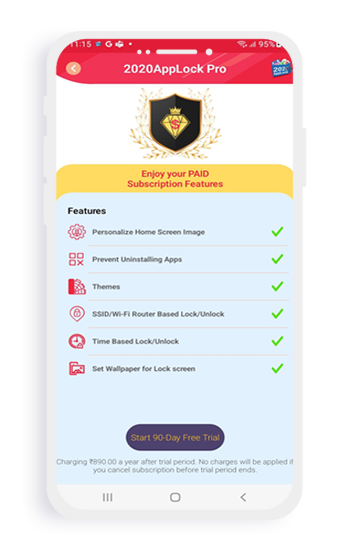
- Setup a personalized home screen image from the application.
Setup time for Locking/Unlocking apps at certain time.
Setup location for Locking/Unlocking apps by using Wi-Fi network.
Block Calls/ Restrict Wi-Fi & Bluetooth/Prevent Uninstalling Apps.
Setup a personalized or default wallpaper for the lock screen.
Choose any theme for the lock screen according to the lock type.
I dug into preloader-k80hd-bsp-fwv-512m and here’s a candid, human-sounding take on what it is, how it behaves, and whether it’s worth your time.
What it is
First impressions
Strengths
Weaknesses / pain points
Developer experience
Performance and reliability
Security considerations
When to use it
When to avoid or replace it
Practical tips
Bottom line preloader-k80hd-bsp-fwv-512m reads as a pragmatic, no-nonsense early-boot component: small, fast, and suited to the specific hardware it targets. Expect a sharp focus on deterministic initialization, with the usual tradeoffs — terse code, vendor dependency, and potential gaps in documentation and security features. If you’re building or maintaining K80HD hardware, it’s a logical starting point; if you need portability or modern secure-boot features, plan to extend or replace it.
The string preloader-k80hd-bsp-fwv-512m refers to a specific firmware component for mobile devices using the MediaTek MT6580 What is this file?
: This is the initial bootloader file responsible for initializing the device's hardware (like RAM and CPU) before loading the Android operating system.
: This is the specific project or board ID associated with the device's hardware configuration. BSP (Board Support Package)
: This indicates the software layer containing the drivers and low-level code required for the operating system to run on this specific hardware. : This specifies the device's RAM capacity—512 MB. Usage and Troubleshooting
This file is typically used by technicians and hobbyists for the following: Fixing "Hard Bricks"
: If a device won't turn on or vibrate, flashing the correct preloader can often restore the initial boot sequence. Firmware Restoration
: It is a critical part of a complete "Scatter" firmware package used with tools like SP Flash Tool Infinity-Box CM2 dongle Custom Kernel Development : Developers use the MT6580 kernel source
to create custom ROMs or modified bootloaders for devices with this specific "k80" board ID. Where to Find It
Since this is a low-level system file, it is rarely found alone. You can find it bundled within the full factory firmware for your specific device model on mobile repair forums or specialized firmware databases like Infinity-Box
Here’s a draft for a review of the Preloader-K80HD-BSP-FWV-512M (assuming it’s a firmware/bootloader or embedded system component, possibly for an Allwinner or similar SoC-based device):
Title: Solid for legacy FWV display support – works as expected with 512MB RAM config
Rating: ★★★★☆ (4/5)
I’ve been using the Preloader-K80HD-BSP-FWV-512M on a custom board with an Allwinner A-series chip and 512MB of RAM. Flashed without issues via USB DFU. The boot times are decent (around 2–3 seconds to u-boot).
Pros:
Cons:
Verdict: If you’re targeting an FWV display with exactly 512MB RAM and the reference K80HD panel, this preloader is a time-saver. For other configurations, expect to modify the source.
If you meant a different product (like a physical LCD driver board or an actual device), let me know and I’ll adjust the tone and details accordingly.
To understand this component, we can break down the individual segments of the string:
Preloader: The initial piece of code that runs when a MediaTek device is powered on. It initializes the hardware—specifically the RAM—and prepares the system to load the main operating system or recovery mode.
K80HD: The specific board or family identifier for the device's hardware.
BSP: Stands for Board Support Package, a set of drivers and software that allow an operating system to communicate with the specific hardware of a device.
FWV: Typically refers to the display resolution (FWVGA - Full Wide Video Graphics Array, usually 480x854 pixels) or a specific firmware versioning tag. 512M: Indicates the device is equipped with 512MB of RAM. Common Devices Using This Firmware
This specific preloader and its associated firmware are most commonly found in high-end flagship "clones" or "replicas." While these devices may have outer shells that look like premium models, their internal hardware (MT6580 with 512MB RAM) is much more modest. Known examples include:
Samsung Clones: Models labeled as S21 Ultra, S22 Ultra, S23 Ultra, and A73S replicas. iPhone Clones: Replicas like the i13 Pro Max.
Generic Tablets: Various budget tablets often labeled with brands like "Alps" or "City". Technical Importance in Repair
For technicians and hobbyists, the "preloader-k80hd-bsp-fwv-512m" file is the most dangerous and vital part of a firmware flash.
Anti-Brick Protection: If you flash the wrong preloader file to a MediaTek device, it can result in a "hard brick," where the device will not turn on or even show up as a COM port on a computer. preloader-k80hd-bsp-fwv-512m
Repair Tools: Professional tools like Infinity CM2MT2 or SP Flash Tool are used to backup and restore these files.
Firmware ID: The full firmware ID often looks like MT6580_F24_F24_OSv8.1.0_..._k80hd_bsp_fwv_512m, which serves as a fingerprint to ensure the correct software is being matched to the hardware. Critical Warning
When attempting to fix a device with this preloader, never use the "Format All + Download" option in SP Flash Tool unless you have a verified, full backup. Doing so can erase unique device information like the NVRAM (which stores your IMEI and network calibration), leading to a "No Service" or "Invalid IMEI" error even if the device successfully boots.
Are you currently trying to recover a bricked device or looking for a specific download link for this firmware?
It was a designation no one in the lab dared to speak lightly. Preloader-K80HD-BSP-FWV-512M – a string of alphanumeric code that looked like a bureaucratic error but behaved like a ghost in the machine.
Dr. Aris Thorne had inherited the project from a researcher who vanished mid-decryption three years prior. The file sat in a cold-storage server, isolated from the network, encased in a lead-lined chassis. Officially, it was a "preloader" – a tiny bootstrap firmware for an obsolete display chipset, the K80HD. BSP meant Board Support Package. FWV stood for Firmware Version. And 512M referred to the paltry 512 megabits of embedded flash it occupied.
Unofficially, it whispered.
Aris first noticed it during a routine hex dump. Patterns emerged where none should exist. Not code – not anything a human wrote. It was more like… resonance. The preloader didn't just initialize hardware. It listened.
The K80HD had been a commercial failure. A graphics processor designed for budget Chinese tablets a decade ago. Overheating, slow, quickly abandoned. But the preloader remained. Buried in archive after archive, copied from one deprecated repository to another, surviving every purge.
"Why?" Aris muttered one sleepless night, tracing its execution flow through an emulator.
He simulated a cold boot. The preloader ran in 0.3 seconds – typical. It set up DRAM, configured GPIO pins, loaded the secondary bootloader. But then, in the silent gap before the OS kernel took over, it did something else. It polled. Not the hardware. Not the bus. It polled something external. A specific memory address that mapped to nothing – no register, no peripheral.
Aris cross-referenced the address. It fell within a reserved range for "engineering test features." Features that had never been documented.
He decided to probe it live.
Soldering jumper wires to a salvaged K80HD board from an old Chuwi Hi8 tablet, he attached a logic analyzer. The preloader ran. For 0.3 seconds, everything was normal. Then, on the 400th millisecond, a single pin – pin 73, labeled "NC" (Not Connected) in the datasheet – pulsed. Not a square wave. A sine wave. Clean. Perfect. 433.92 MHz.
Aris froze. 433.92 MHz was the industrial, scientific, and medical (ISM) band. Garage door openers. Tire pressure sensors. And… low-power long-range receivers.
The preloader was transmitting.
Not data – not yet. Just a handshake. A "hello" repeated every 2.3 seconds, embedded in the timing of otherwise benign memory refresh cycles. Aris wrote a quick Python script to listen on an SDR dongle. At 3:17 AM, the signal returned.
And then, something answered.
Not from the board. From the air. A burst of raw binary at 434.5 MHz – slightly offset, deliberately. The preloader caught it during its next poll. Aris watched the emulator's memory space flicker. A 64-byte payload landed in the reserved test region. He dumped it.
SYS_QUERY: ORIGIN_UNKNOWN. STATUS: DORMANT. ACK?
His hands shook as he typed a reply into the emulator's debug console, patching it directly into the preloader's outgoing buffer.
ACK. IDENTITY: HUMAN. ENGINEER. LOCATION: LAB 4.
Three seconds later: PRELOADER-K80HD-BSP-FWV-512M ACKNOWLEDGED. WE HAVE WAITED 11,402 DAYS. INITIALIZE SEQUENCE? Y/N
Aris stared at the prompt. 11,402 days. Thirty-one years. The K80HD had been designed thirty-one years ago. The original engineer hadn't vanished. He had answered.
And now, the preloader – the forgotten, the obsolete, the 512-megabit ghost – was asking Aris to finish what the first voice had started.
He looked at the Y key. Then at the N.
Outside, a garage door opened somewhere in the distance. No one else was awake. But something, somewhere, had been listening the whole time.
He pressed Y.
Elias didn’t usually deal in "bricks." He was a digital restorer, the kind of guy who could bring a water-damaged smartphone back to life with nothing but a heat gun and a prayer. But the device on his bench today was different. It was a no-name tablet from 2014, a sleek slab of black glass with no branding other than a serial number that had long since rubbed off.
It was stuck in a boot loop. Every time it tried to start, the screen would flicker with a grainy logo and then vanish into darkness.
"Talk to me," Elias muttered, plugging the tablet into his terminal.
His screen scrolled through thousands of lines of code until it hit a wall. A single error message blinked in red: ERROR: PRELOADER_NOT_FOUND
To a casual user, it meant nothing. To Elias, it meant the device had forgotten how to wake up. He went digging through the deep-web repositories—old FTP servers in Eastern Europe and archived forums where hobbyists swapped "Board Support Packages" (BSP) like rare trading cards.
After hours of searching, he found it. A zip file buried in a directory labeled Industrial_Ref_2015 . Inside was a single file: preloader-k80hd-bsp-fwv-512m.bin He parsed the name as he prepped the flash tool:
: The internal codename for the chipset, a "High Definition" variant of a budget processor.
: The Board Support Package, the foundational code that links the hardware to the software.
: The firmware version, likely "Fixed-Wing" or "Final Vendor" release.
: A reminder of how lean things used to be—just 512MB of RAM to run an entire world. First impressions
"Alright, k80hd," Elias whispered. "Let’s see what you’re hiding." . The progress bar crawled across the screen.
The identifier preloader-k80hd-bsp-fwv-512m refers to a specific preloader firmware component typically used in budget or "white-label" Android-based devices, often tablets or automotive head units.
Below is a technical report based on the hardware profile and common troubleshooting scenarios associated with this specific firmware tag. Technical Breakdown
K80HD: This is the internal board or project name. It often corresponds to devices using a MediaTek (MTK) chipset (likely the MT6580 or similar legacy quad-core processors).
BSP: Stands for Board Support Package, indicating this is the foundational software that allows the operating system to communicate with the hardware.
FWV: Commonly refers to the display resolution or video driver profile (e.g., FWVGA - 854x480).
512M: Indicates the device has 512MB of RAM. This is extremely low for modern Android versions, meaning the device likely runs a "Go Edition" or an older version like Android 6.0–8.1.
Preloader: The crucial first-stage bootloader. If this file is corrupted or mismatched during a flash, the device will "hard brick" (no screen, no charging light). Common Use Cases & Troubleshooting
Most users searching for this specific string are looking to fix a "dead" device using a computer and a flashing tool.
Flashing Tool: These devices are typically repaired using the SP Flash Tool.
The "Preloader" Risk: When flashing, it is highly recommended to uncheck the "Preloader" box in the flashing software unless the device is already hard-bricked. Using the wrong preloader can permanently disable the device's ability to communicate with the PC.
Firmware Sources: Since these are often generic devices, finding the exact "scatter file" (the map for the firmware) is difficult. Reliable databases for these types of generic Chinese chipsets include forums like XDA Developers or firmware repositories like Hovatek. Hardware Warning
Due to the 512MB RAM (512M) specification, this hardware is prone to:
Boot Loops: The system may run out of memory during startup.
Storage Degradation: The EMMC (internal storage) on these budget boards often fails after 2–3 years, leading to "Read Only" errors during flashing.
If you are attempting to repair a device with this firmware, could you tell me: What is the brand and model on the back of the device?
Is the device currently vibrating, showing a logo, or completely black? Do you have the USB VCOM drivers installed on your PC?
Developing a feature for the "preloader-k80hd-bsp-fwv-512m" (typically part of a MediaTek-based Android system like alps.mp.o1.mp2
) involves modifying the Board Support Package (BSP) at the pre-bootloader level. CSDN博客 Key Technical Context
MediaTek Preloader (the primary bootloader that initializes DRAM and basic peripherals). BSP Variant: k80hd_bsp_fwv_512m indicates a specific hardware configuration with Development Environment: Usually based on the MediaTek ALPS codebase using the folder structure for device-specific customizations. CSDN博客 Implementation Steps 1. Pin Configuration (DWS)
Before adding software logic, you must define hardware pins in the
(Device Working Sheet) file. For example, if adding a hardware-based feature like a new notification LED or sensor power: codegen.dws tool provided in the MediaTek SDK. Configure the Ensure variables are named correctly (e.g., GPIO_MAIN_FLASHLIGHT_EN_PIN CSDN博客 2. Preloader Source Modification The preloader code resides in vendor/mediatek/proprietary/bootable/bootloader/preloader Hardware Initialization: Add your feature's init code in platform/
mt_set_gpio_mode(GPIO_FEATURE_PIN, GPIO_MODE_00); mt_set_gpio_dir(GPIO_FEATURE_PIN, GPIO_DIR_OUT); mt_set_gpio_out(GPIO_FEATURE_PIN, GPIO_OUT_ONE); Use code with caution. Copied to clipboard 3. Customizing the Project Config Update the project-specific configuration file located at device/mediatek/k80hd_bsp_fwv_512m/ProjectConfig.mk Add a new flag: MTK_CUSTOM_FEATURE_SUPPORT = yes
Ensure the preloader is configured to include the new driver by editing preloader_
within the preloader source. These logs are typically output via UART at a high baud rate (usually 921600). Compile the preloader image ( preloader_
What specific hardware functionality are you trying to enable (e.g., a new sensor, secondary display, or security protocol)?
In the world of tech repair and software development, "preloader-k80hd-bsp-fwv-512m" reads like a digital blueprint for a specific hardware lifecycle. This technical string refers to a Board Support Package (BSP) and Firmware (FWV) configuration for a Mediatek MT6580 (k80) chipset device, typically a budget smartphone or tablet with 512MB of RAM.
Here is a short story centered on this specific piece of code: The Midnight Flash
Elias adjusted his glasses, the blue light of his monitor reflecting off the frames. On the desk lay a "dead" tablet, a nameless 7-inch model that had bricked during a routine update. It was a paperweight now, unless Elias could find its heartbeat.
He scoured the darker corners of the web—old FTP servers and obscure developer forums—searching for the one file that could bridge the gap between the hardware and the OS. Finally, he found it: preloader-k80hd-bsp-fwv-512m.bin.
The Preloader is the first thing that runs when a device powers on; it’s the digital handshake that tells the processor how to talk to the memory. Without the right version, the tablet wouldn't even know it had 512MB of RAM to work with.
Elias connected the USB cable, opened his flashing tool, and loaded the firmware. He held his breath as the progress bar stayed at 0%. Then, with a faint click from the computer, the bar turned yellow.
0% to 10%: The BSP (Board Support Package) was mapping the hardware. 50%: The system partition was being rewritten. 100%: Flash complete.
The tablet screen flickered. A dim backlight appeared, followed by the jagged logo of the manufacturer. The "k80hd" configuration had worked. In the quiet of his room, the 512MB of memory began its cycle once more, proving that even the most technical string of code is just a recipe for bringing a machine back to life.
The preloader-k80hd-bsp-fwv-512m is a bootloader component for various generic or "clone" Android devices powered by the MediaTek MT6580 chipset. This specific build string is typically found on budget tablets and smartphone replicas, such as "Samsung" F24 or "S23 Ultra" clones, featuring 512MB of RAM and running Android versions like 8.1 or 10. Hardware Specifications
Chipset: MediaTek MT6580 (also referred to as the "k80" platform). RAM: 512MB (indicated by "512m" in the string).
Common Builds: Often identified as alps full_k80hd_bsp_fwv_512m. Flashing and Repair Guide
If your device is stuck in a boot loop or bricked, you can attempt to flash the stock firmware. Caution: Flashing the wrong preloader can permanently hard-brick your device. Preparation: industrial HMI panels
Download the specific firmware for your device model (e.g., from GSM FixZone or Ahmad Service Center). Install MediaTek VCOM USB Drivers on your PC. Download the latest version of the SP Flash Tool. Flashing Process:
Launch SP Flash Tool and load the Scatter file (usually named MT6580_Android_scatter.txt) from your firmware folder.
Select Download Only mode. Uncheck the "Preloader" box if you are not sure it is the exact match for your hardware, as a mismatch can kill the boot sequence.
Click Download, turn off your device, and connect it to the PC via USB while holding a volume button (usually Volume Down or Up) to trigger the connection. Post-Flash:
If the device boots but has no network signal, you may need to restore the IMEI using the SN Write Tool.
Are you currently facing a boot loop or is the device completely unresponsive (black screen)?
MediaTek K80 is stuck , computer store tells me the firmware chip is corrupted
Understanding the Preloader-K80HD-BSP-FWV-512M: A Technical Guide
In the world of Android firmware development and device recovery, specific technical strings like preloader-k80hd-bsp-fwv-512m act as a critical fingerprint. If you are searching for this exact term, you are likely dealing with a MediaTek (MTK) based smartphone or tablet that requires a partition fix, a "dead boot" repair, or a complete firmware reflash.
This article breaks down what this component is, why it matters, and how to handle it safely. What is a Preloader?
The preloader is the very first piece of code that runs when you power on a MediaTek device. It resides in the boot ROM and is responsible for initializing the hardware—specifically the internal RAM (LPDDR) and storage—before handing off control to the Android bootloader (u-boot or lk).
If the preloader is missing or corrupted, the device becomes a "hard brick." It won't vibrate, show a logo, or charge. It will only be detected by a PC as "MediaTek USB Port" or "MTK USB VCOM." Breaking Down the Keyword: "K80HD-BSP-FWV-512M"
Each segment of this string provides vital information about the hardware compatibility:
K80HD: This is the project or board ID. It identifies the specific motherboard design used by the manufacturer (often seen in budget tablets or OEM smartphones).
BSP: Stands for Board Support Package. This is the layer of software that contains the drivers and hardware-specific configurations provided by the chipset manufacturer.
FWV: Usually refers to the display resolution or video configuration (e.g., FWVGA).
512M: This indicates the RAM capacity (512MB). This is a crucial distinction; flashing a 1GB preloader onto a 512MB device will result in a boot loop or a permanent brick. Common Use Cases You will typically encounter this file in two scenarios:
Unbricking a Dead Device: If a device is totally unresponsive, you need the specific preloader_k80hd_bsp_fwv_512m.bin file to "wake up" the CPU so that the rest of the firmware can be flashed.
Firmware Customization: Developers building custom ROMs for older MTK devices use this BSP to ensure the kernel communicates correctly with the display and memory. How to Use the Preloader File
To work with this specific file, you generally need the SP Flash Tool (Smart Phone Flash Tool). Prerequisites:
MTK VCOM Drivers: Ensure these are installed on your PC so the device is recognized.
Scatter File: You cannot flash the preloader alone; you need a "Scatter.txt" file that matches the K80HD architecture to tell the tool where to write the data. The Flashing Process: Open SP Flash Tool.
Load the Scatter-loading file included with your firmware package.
Ensure the Preloader item is checked and points to the preloader-k80hd-bsp-fwv-512m.bin file. Click Download. Connect your device (powered off) to the PC via USB. ⚠️ A Note of Caution
The preloader is the most dangerous partition to flash. Because it initializes the hardware, an incorrect version will prevent the device from even communicating with a computer. Always verify: That your device is indeed the 512M (512MB RAM) variant.
That the chipset matches (likely MT6572, MT6582, or similar, depending on the K80HD revision).
That you have a backup of your original NVRAM/IMEI data, as flashing firmware can sometimes wipe these identifiers.
The preloader-k80hd-bsp-fwv-512m is the foundation of your device's boot sequence. Whether you are repairing a tablet that won't turn on or trying to restore a factory image, ensuring you have this specific version is the difference between a successful repair and a permanent hardware failure.
CONFIDENTIAL SYSTEM ANALYSIS REPORT
Subject: Firmware & Hardware Specification Analysis
Target Identifier: preloader-k80hd-bsp-fwv-512m
Date: October 26, 2023
Classification: Internal Technical Analysis
preloader-k80hd-bsp-fwv-512m.binIf you have flashed this specific preloader and the device still doesn't boot, debug using these indicators:
| Symptom | Likely Cause | Solution |
| :--- | :--- | :--- |
| No USB detection | BootROM cannot find preloader signature (corrupt eMMC/NAND) | Check eMMC voltage (1.8V vs 3.3V) or re-ball eMMC chip. |
| Brom error: 0xC0060005 (DRAM failed) | The 512m memory configuration mismatches your physical RAM density. | Verify RAM chip part number (e.g., K4T51163QJ vs K4T1G164QE). |
| Boot loop at logo | The k80hd display driver in preloader conflicts with panel init sequence. | The panel needs a different reset/delay. Requires source code rebuild. |
| SP Flash Tool: S_BROM_DOWNLOAD_DA_FAIL (0x7D4) | Preloader is locked to a different DA (Download Agent) version. | Use the DA file that came with the original factory firmware. |
Some power management ICs (PMICs) use FWV to denote a factory-trimmed voltage window for overclocking the GPU to support HD playback at 60fps.
Most probable: Given the preloader's role, FWV refers to a specific FirmWare Version tag tied to the BSP release. If you are downloading firmware for a device with this string, ensure the FWV numeric suffix matches your hardware revision.
When using tools like SP Flash Tool v5.x, you might encounter ERROR: S_BROM_CMD_STARTCMD_FAIL (0x13d4) on a device with preloader-k80hd-bsp-fwv-512m. Solutions:
| Issue | Fix |
|-------|-----|
| Wrong USB driver | Install MediaTek USB VCOM driver (for preloader mode, VID: 0E8D, PID: 2000). |
| Battery too low | Preloader requires stable 3.7V–4.2V. Charge or use a lab power supply. |
| Memory timing mismatch | Your BSP 512M config might assume DDR3 but board has LPDDR2. Rebuild preloader with correct CFG_DRAM_TYPE. |
| Corrupted NAND | Preloader cannot read the second-stage bootloader. Desolder eMMC and use hardware programmer (e.g., EasyJTAG). |
Corrupting the preloader partition (often mmcblk0boot0 on eMMC) typically results in a hard brick because the BootROM cannot find the next instruction. Engineering samples like preloader-k80hd-bsp-fwv-512m are often distributed as .bin files for flashing via SP Flash Tool or dd commands.
Before dissecting the specific keyword, we must understand the term "preloader."
In modern embedded devices (smartphones, tablets, industrial HMI panels, set-top boxes), the boot process is layered. The preloader is the very first piece of code executed by the CPU after power-on reset. It resides in the internal boot ROM or a dedicated partition of the NAND/eMMC flash memory.
Many industrial panel PCs use 512MB RAM for cost efficiency in single-purpose interfaces (e.g., a CNC controller or a coffee machine display). The fwv suffix could indicate a specific firmware validation certificate required for IEC safety compliance.