Khatta Meetha Rape Scene Of Urva Exclusive -
an early stage Building Information Modeller
for the rest of us, mere mortal architects
a little bit goes a lot further
It is free.
Download now!
an early stage Building Information Modeller
for the rest of us, mere mortal architects
a little bit goes a lot further
Have you walked away...
TAD originated at a small architect's office in India in 1989. It is a different approach to BIM (Building Information Modelling) from what you may have seen elsewhere. It is based on fundamental architectural research. It is not a software
that was derived from other engineering fields and then modified to suit architects.
Since it is so much in touch with what architects really do, it is extremely efficient in doing it. The file-sizes of this BIM software are literally in kilobytes.
At the same time it has extensive querying capabilities. The architect can actually get objectivity from quite early on -- almost from the bubble-diagramming stages. For example; quantities, area calculations, municipal (local government)
calculations and so on. Such capability can even be extended using add-ons (probes)
I know the TAD system quite well, and it is an improvement on BIM in that in enables imprecise models to be represented to a far greater extent than BIM does. This is not surprising, since TAD is actually developed for architects and for architectural design, while BIM is developed for the AEC industry broadly and is now essentially a standard (via IFCs) for the industry and architects use it for design for reasons of productivity (for the same bad reason that they were consumers of AutoCAD back in the day).

When designing, we need to be in touch with the various spaces we use. After all, we are not termites -- who live inside built matter of the walls. An architect is quite interested in knowing how the spaces are inter-related, and whether they
would work for our users. The walls come as a bye-product of having made these spaces.
TAD respects such an approach. That is why it is very easy to start designing directly in TAD itself. It is like having a scratch pad handy.
But if you think this is just a bubble diagramming too ... well, it is not. You can even create the entire model; including the built matter that is present in the building.
What it does NOT do is drafting. For that, you can easily export from TAD and use the regular CAD software that you were using earlier.
The adjoining photo shows the internal stack through the tiny row-house.
The west wall has a bit of glass blocks. It not just lights up the space
but it drives the air inside the stack. This is a intricate vertical space
that goes through the row house to provide ventilation -- all modelled
inside TAD
TAD helps you iteratively design. Like a potter at work. At any point in time, you can extract objective information such as areas, distances and so on. What is the point of designing a building only to realize at the final stages that some
mathematical criteria was not right?
This capability of querying into the design is very powerful. TAD has a built in language called "ARDELA" (ARchitectural DEsign LAnguage) That can be used to create add-ons to provide additional querying functionality. These add-ons probe into
your model and provide you answers.
We would be releasing a marketplace for these probes -- and also a simple way for you to write your own probes too
The adjoining photo, a small gazebo kind of space was carved out on the
terrace on one part of the split-level in the rowhouse. An ARDELA area
add-on (probe) did all the calculations. We were then confident that we
can get that semi-enclosed space, without it being counted by the municipality
(in India, these area calculations are known as FSI calculations)
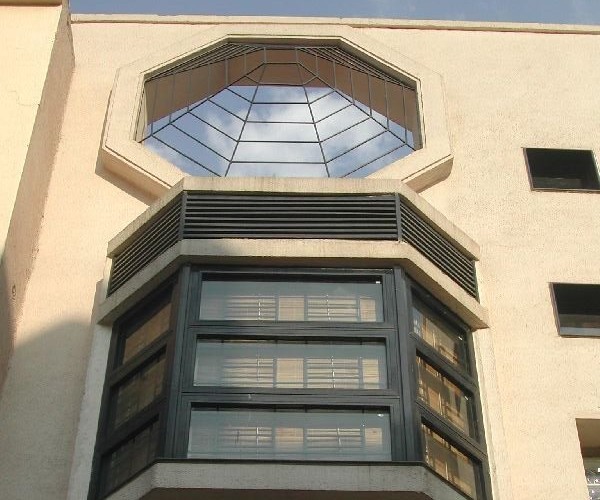
Over 3 million of actual built projects done over last 30 years. (From the office that created TAD) Scores of unbuilt ones
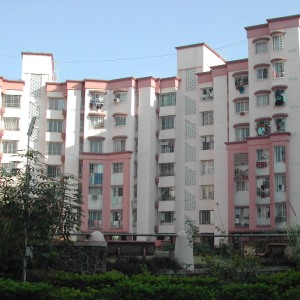
Nerul, Navi Mumbai, India

Nerul, Navi Mumbai, India
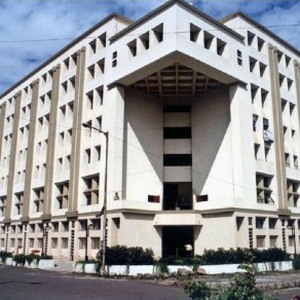
Nerul, Navi Mumbai
Cinema, at its core, is an empathy machine. For two hours, we sit in the dark, allowing moving images and sound to hijack our nervous systems. While a clever plot or a stunning visual effect can delight us, it is the singular, magnetic pull of a scene that breaks us. A great dramatic scene doesn't just advance the story; it stops time. It is a pressure cooker where character, theme, and emotion converge into an explosion that feels both surprising and inevitable.
But what transforms a well-acted moment into a powerful one? It is the alchemy of restraint, subtext, and the catharsis of a dam breaking. Here, we dissect the architecture of agony, rage, and redemption, looking at the scenes that have become etched into our collective unconscious.
Before diving into specific films, it is worth noting that volume does not equal power. The most devastating scenes in cinema are rarely the loudest. True dramatic power comes from stakes (what is about to be lost forever), authenticity (the illusion that we are watching a real person break), and revelation (the moment a character can no longer lie to themselves).
Whether it is the screech of brakes, the silence of a paused phone call, or the whisper of a confession, the medium relies on contrast. A powerful scene understands that to make an audience cry, you must first make them hold their breath.
The Scene: A married couple (in Bergman, Liv Ullmann & Erland Josephson) dissect their affair over a quiet dinner. The tone shifts from civil to savage without a raised voice. Why it’s powerful: These scenes prove that drama doesn’t need volume. They use the domestic table as an arena. When Ullmann says, “I have nothing left to give you,” it’s more devastating than any scream. The power is in the precision of the cruelty. khatta meetha rape scene of urva exclusive
Film: A Few Good Men (1992) Scene: "You can't handle the truth!"
This is the definitive courtroom showdown. Lt. Kaffee (Tom Cruise) demands the truth from Col. Jessup (Jack Nicholson), and Jessup delivers a terrifying defense of military necessity and authoritarianism.
Film: Network (1976) Scene: "I'm as mad as hell..."
While technically a satire, the raw energy of this scene is unmatched. News anchor Howard Beale (Peter Finch) has a mental breakdown on live television. Instead of being fired, he becomes a prophet of rage for a disillusioned public. Beyond the Dialogue: Dissecting the Most Powerful Dramatic
The Scene: Jason, the son of a dead motorcycle thief, watches his unknowing father’s grave from a distance. No dialogue. Just a teenage boy, a cheap suit, and the sound of wind. Why it’s powerful: The drama is inherited tragedy. The camera stays on his face as he processes that his entire existence is the result of a crime. It’s the moment a boy becomes a ghost of his father. Silence, here, is louder than any monologue.
Film: Manchester by the Sea (2016) Scene: The Police Station Confession
Lee Chandler (Casey Affleck) is being questioned by police after a horrific accident. The police tell him he made a terrible mistake, but it wasn't a crime, so he is free to go. Lee looks at the officer, confused, and asks, "I can go?" Before the officer can finish, Lee attempts to take his own life with a police officer's gun.
If There Will Be Blood is a volcano, Manchester by the Sea is a glacier. Kenneth Lonergan’s film is a study of grief so profound it becomes paralysis. The most powerful scene is not a conversation; it is a confession in a police station. Why it works: It is a battle of ideologies
Lee Chandler (Casey Affleck) has accidentally started a fire that killed his three children. After being interviewed, the officer explains that because he was drunk but not malicious, "We’re going to let you go." Lee is confused. Where is the punishment? When the officer says, "You made a horrible mistake," Lee stands up, tries to walk out, and then—in a single, unbroken take—grabs the officer’s gun to blow his own head off. He is tackled before he can succeed.
The power of this scene is in its quiet desperation. There is no villain, no conspiracy. Just a man who realizes that the justice system cannot punish him enough to match his guilt. Affleck’s face as he lunges for the gun is not angry; it is broken relief. He wants to die because living with the knowledge is the only hell he hasn’t tried yet. This scene redefines "powerful" not as a shout, but as a gasp for finality.
Power does not always weep; sometimes, it rants. Paul Thomas Anderson’s There Will Be Blood culminates in a bowling alley where oil tycoon Daniel Plainview (Daniel Day-Lewis) confronts the false prophet Eli Sunday. The scene is a masterclass in verbal demolition.
After two and a half hours of watching Plainview swallow the world, the drama hinges on a single word: "Drainage." Plainview mocks Eli’s theological authority by revealing he has taken his land, his oil, and his soul. "I drink your milkshake! I drink it up!" he screams. It is absurd, terrifying, and brilliant. The power here lies in the completion of a character arc. Plainview doesn’t just want money; he wants to destroy the idea of anyone else having power. When he beats Eli to death with a bowling pin and whispers, "I’m finished," we are witnessing the logical, horrific conclusion of the American obsession with winning. The scene is powerful because it is the sound of a monster ceasing to pretend he is human.

For far too long, we architects have not asked ourselves how we may do a better job in this world. Instead we just relied on some outside expertise and hand-me-downs. Let us rise and think for ourselves.