Budak Sekolah Tetek Besar 3gp Repack Work Access
for iPhone, iPad, Mac and Vision Pro



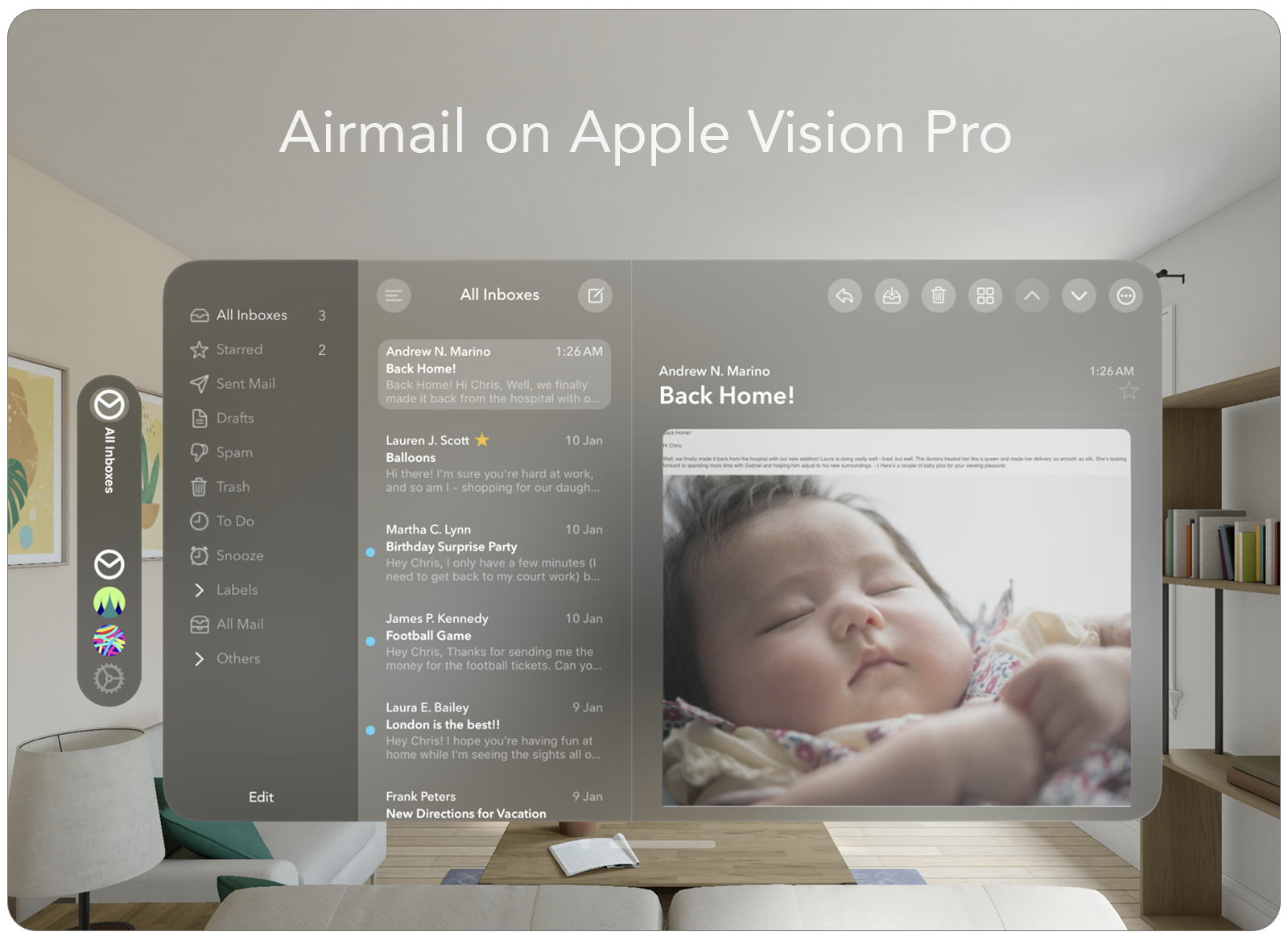

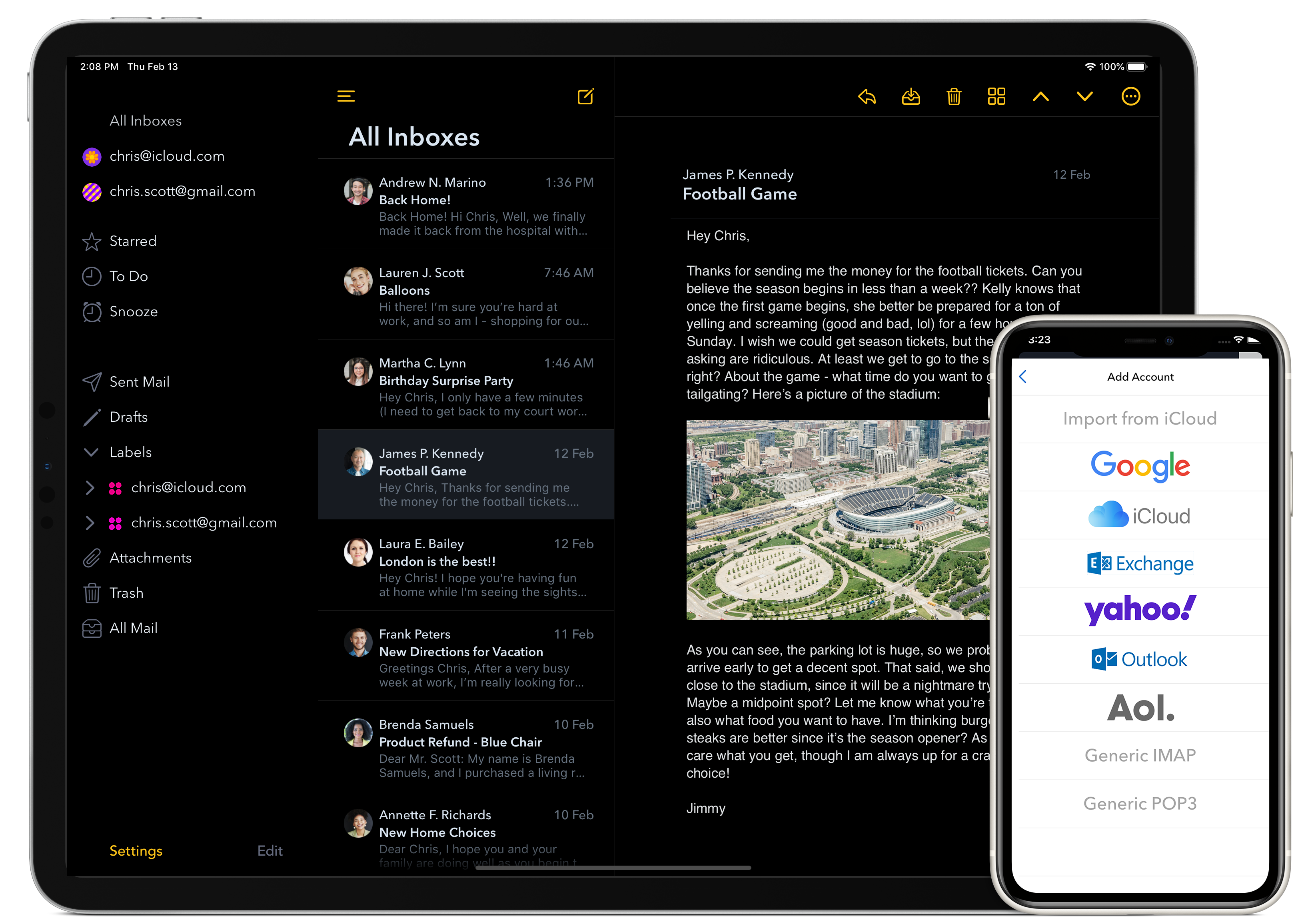
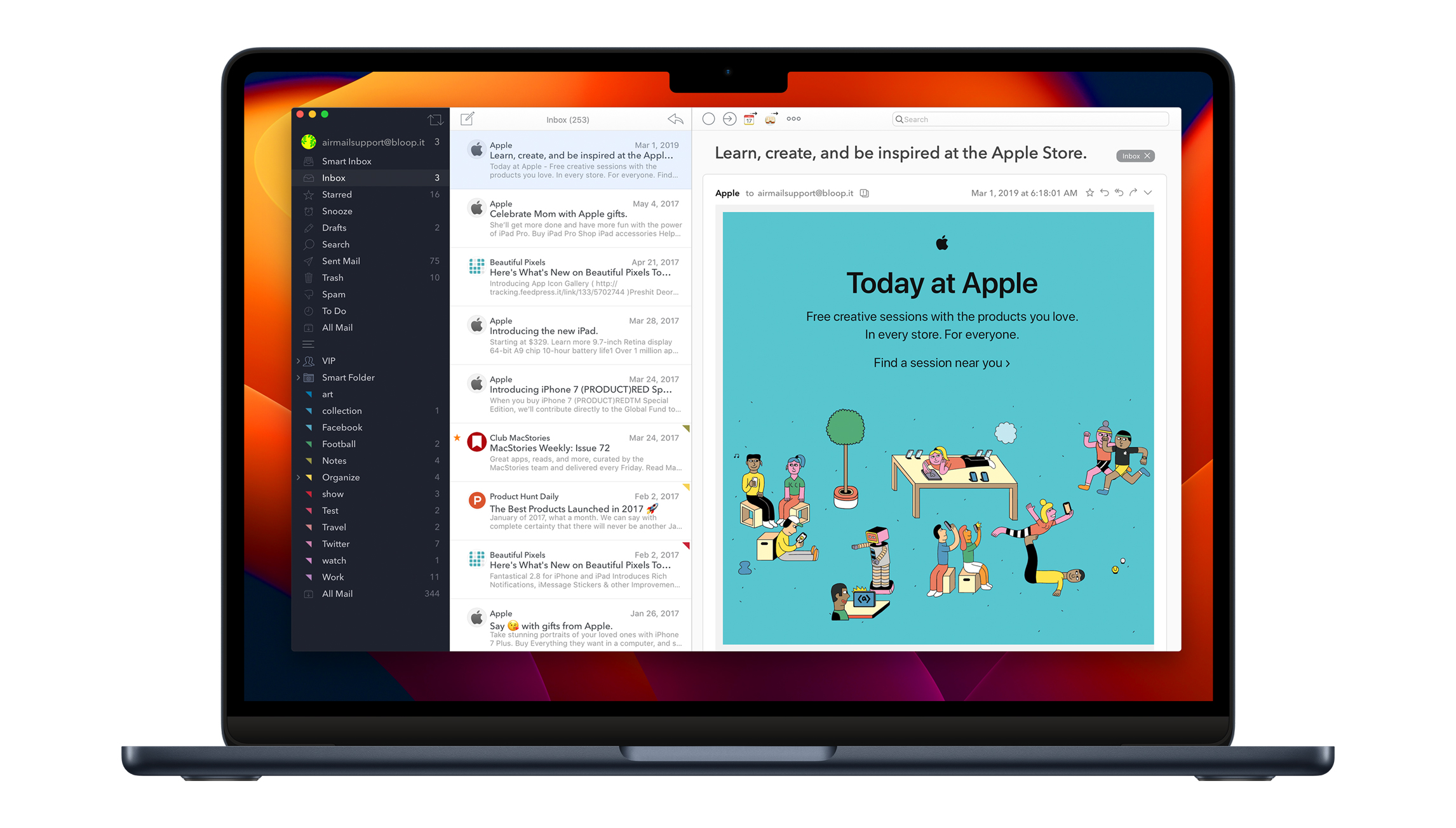
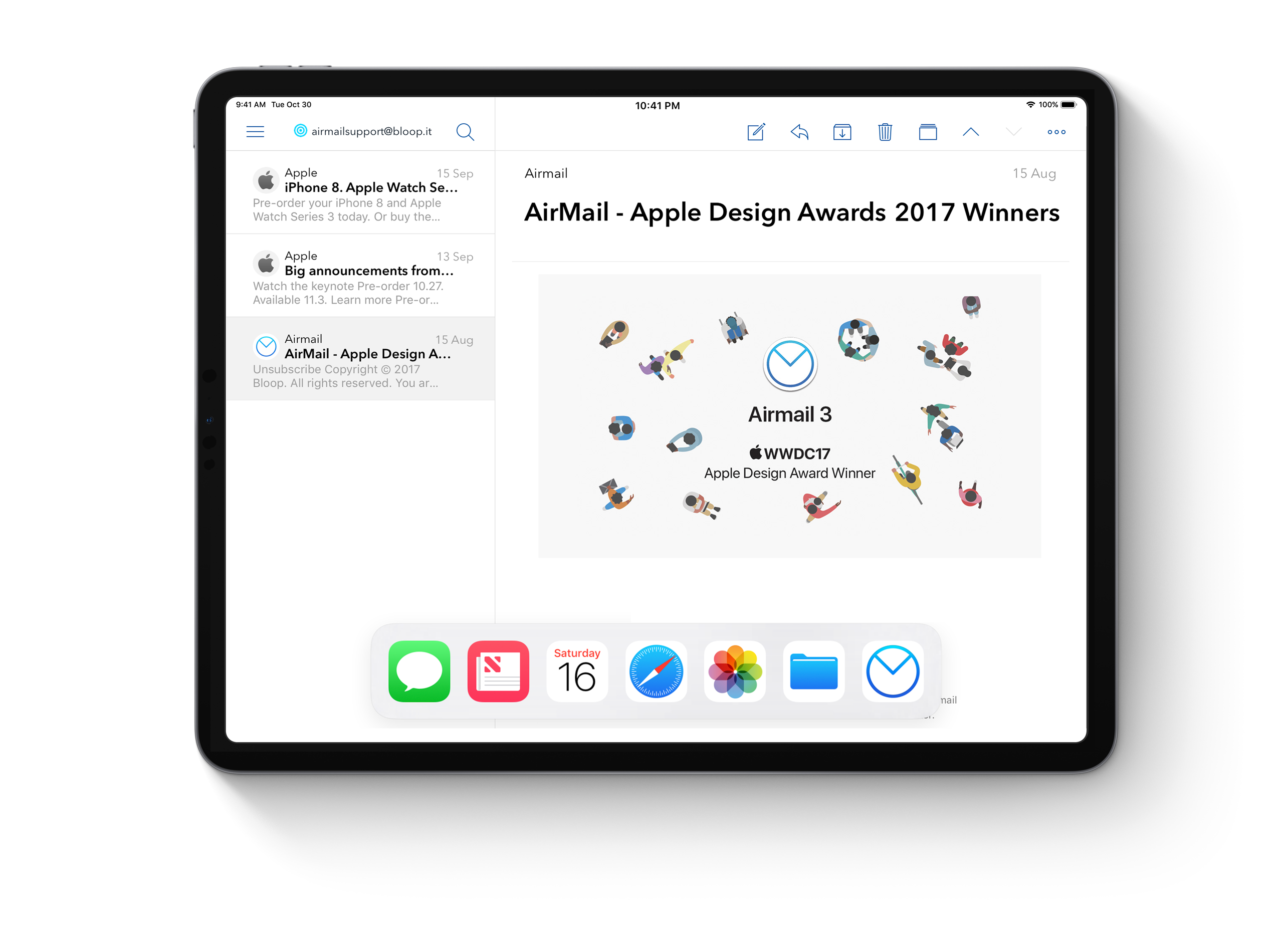
Airmail 3 — This fully accessible mail client was designed specifically for iOS, macOS and watchOS. Email workflow is optimized with extensive customizations, custom actions and deep integration with a wide range of apps and services.



Airmail is designed from the ground up to be a powerful mail client which allows you to customize it to meet your needs. Integrate your favorite apps, and create custom actions to make your life easier. Whether you're using your Mac, iPad, iPhone or even your Apple Watch, Airmail can be wherever you need.
Add as many email accounts of any type your like to Airmail. (Gmail, GSuite, iCloud Mail, Exchange, Office 365, Microsoft Outlook, IMAP and POP3).
When you just want to see the important emails, the smart inbox is here for you. It automatically filters out newsletters and other distractions, leaving you with just the crucial messages.
When you don't want to deal with an email now, but don't want it in your inbox either, use the snooze function to hide it until it's relevant. From concert tickets to flight confirmations, keep the emails out of the way until you need them.
See all of the email in all of your inboxes at once with the unified inbox feature. You can even exclude accounts from this view if you want to.
If privacy is paramount then you can enable privacy mode which will process all the data locally on your device. Privacy mode also blocks tracking pixels, and prevents images from loading automatically.
Schedule emails for the perfect moment. Schedule your emails to land in the recipient’s inbox at just the right time. Whether it’s a client in Australia or a business partner in Europe, your email will always be on top.
The smell of floor wax and Milo from the canteen always meant one thing: another Monday morning assembly at SMK Seri Permai.
Aina smoothed out her pinafore, making sure her school badge was perfectly aligned. Beside her, her best friend Mei Ling was frantically whispering the formulas for the SPM Physics paper they had later that afternoon.
"Rileks-lah, Mei," Aina whispered, adjusting her tudung. "You’ve been studying since CNY. You’ll be fine."
The assembly started with the usual ritual: the national anthem Negaraku, followed by the state song, and then the "Sekolahku Sejahtera" chorus that echoed off the damp concrete walls. Under the heat of the 8:00 AM sun, the students stood in neat rows—a sea of white, blue, and green.
The highlight of the morning wasn't the principal’s speech about discipline, but the announcement that the Koperasi (school shop) had finally restocked the legendary spicy chicken buns. In a Malaysian school, food was the ultimate motivator.
By recess, the heat was shimmering off the asphalt. The canteen was a beautiful chaos. Aina and Mei Ling sat at their usual spot with Muthu, who was already halfway through a plate of Nasi Lemak wrapped in brown paper.
"Did you guys see the notice?" Muthu asked, wiping sambal from his thumb. "The Cikgu is looking for volunteers for the Hari Guru performance next month. I’m thinking of doing a Bollywood-meets-K-Pop dance."
"Only if you let us wear the traditional costumes," Mei Ling laughed. "I still have my Cheongsam from last year's assembly."
That was the magic of school life in Malaysia. One moment they were stressing over the intricacies of Sejarah (History) facts, and the next, they were debating which stall had the best air sirap. It was a world of "Can I borrow your Liquid Paper?", "Teacher, may I go to the toilet?", and the collective groan when the bell rang to signify the end of a double-period of Add-Maths. budak sekolah tetek besar 3gp repack work
As the final bell rang at 1:30 PM, Aina walked toward the school gate, passing the pak cik selling fried snacks at the fence. The weight of her backpack was heavy with textbooks, but her heart felt light. Between the exams and the strict rules, it was the laughter in the corridors and the shared snacks under the rain tree that truly taught them what it meant to be Malaysian.
Malaysian education is a unique blend of multiculturalism and structured discipline, providing a system that is often free for citizens but highly competitive The Malaysian Education Journey Education is divided into five key stages, with primary education being compulsory since 2003. Preschool (Ages 4–6): Optional, mostly private or government-run. Primary School (Ages 7–12): Six years from Standard 1 to 6. Secondary School (Ages 13–17): Five years from Form 1 to 5. Post-Secondary (Ages 17+):
Options include Form 6 (STPM), Matriculation, or private foundation programs. Tertiary Education:
Public and private universities, polytechnics, and vocational colleges. Typical School Life The School Day: Most schools operate in a single session (usually 7:30 AM to 1:30/2:30 PM
), though some use a double-session (morning and afternoon) to manage overcrowding. Multilingual Schools: Students can attend national schools ( ) which use Malay, or national-type schools ( ) which use Mandarin or Tamil. Compulsory Uniforms: Strict dress codes apply nationwide.
White shirts with navy blue trousers (primary) or olive green (secondary).
Navy blue (primary) or turquoise (secondary) pinafores, or the traditional Baju Kurung Assembly & Rituals:
Mornings often begin with a formal assembly in the school hall for the national anthem ("Negaraku") and the school song. Culture & Extracurriculars (Kokus) Extracurricular activities, or The smell of floor wax and Milo from
are mandatory. Students must typically join three types of clubs: Uniformed Bodies:
Examples include the Scouts, Red Crescent, or Kadet Remaja Sekolah. Sports & Games: Ranging from badminton and football to traditional games. Clubs & Societies:
Focused on academic interests (Science Club) or hobbies (Photography). Academic Pressure & Key Exams
While primary and lower secondary standardized tests (UPSR and PMR/PT3) have been largely abolished in favor of school-based assessments, the Sijil Pelajaran Malaysia (SPM)
at age 17 remains the most critical high-stakes exam for university entry.
This is a different universe. Here, instruction is in Mandarin, with BM and English taught as second languages. SJKC schools are famous for:
Students from SJKCs often have superior Math and Science skills but struggle with Bahasa Malaysia. The SPM BM pass rate for SJKC students is a national concern.
Malaysian school life begins early—often by 7:00 AM or 7:30 AM. The day is long. Students typically attend school until 1:00 PM or 2:00 PM, but few go straight home. Brutal homework loads: Primary school students often have
Malaysia has one of the highest youth suicide rates in Asia. The Education Ministry has finally introduced "Program Guru Penyayang" (Caring Teacher Programme) and removed the UPSR and PT3 exams to reduce pressure. However, classroom stress remains high. Trauma from bullying (physical and cyber) is rampant.
Malaysia is a nation that thrives on diversity. Nestled in the heart of Southeast Asia, this multicultural country is home to Malays, Chinese, Indians, and numerous indigenous groups living side by side. Unsurprisingly, this rich tapestry of ethnicities, languages, and religions is the very foundation upon which the Malaysian education system is built.
For an outsider, Malaysian school life is a fascinating paradox: it is simultaneously rigorous and relaxed, multilingual yet standardized, highly competitive in academics yet deeply invested in character building. From the early morning call to prayer echoing near a sekolah kebangsaan (national school) to the chaotic energy of a Chinese independent school’s co-curricular fair, the landscape is varied. This article explores the structure, culture, challenges, and unique flavor of Malaysian education and the daily life of its students.
Excessive Exam Pressure & Rote Learning
Inequity Between Urban & Rural Schools
Language Policy Controversies
Social & Religious Segregation
Teacher Quality & Workload
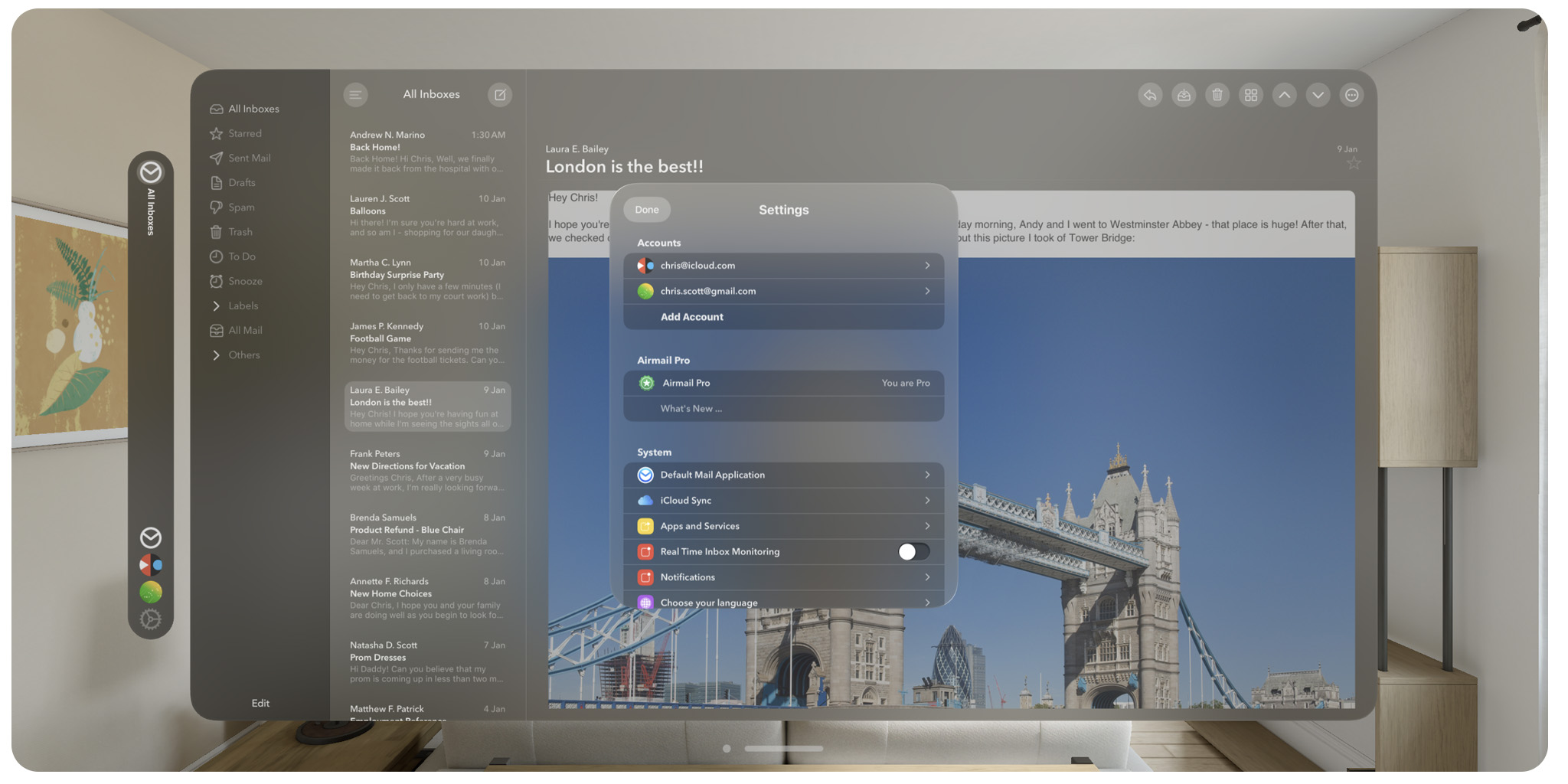
Sync your account settings, signatures, templates, account icons between your iOS devices and Mac with iCloud sync. Set things up once you’ll never need to think about it again.

Airmail supports the following languages: English, Arabic, Burmese, Catalan, Czech, Danish, Dutch, Finnish, French, Galician, German, Greek, Hebrew, Hungarian, Italian, Japanese, Korean, Norwegian Bokmål, Norwegian Nynorsk, Polish, Portuguese, Romanian, Russian, Serbian, Simplified Chinese, Slovak, Spanish, Swedish, Traditional Chinese, Turkish, & Ukrainian.

Use Siri and Shortcuts to send email as part of other automations. Build anything from a mail merge, to a meeting notes parse which sends tasks to the person they are assigned to. Use either the Send or the Search action to integrate Airmail into everything you might want to automate on your iPhone or iPad.

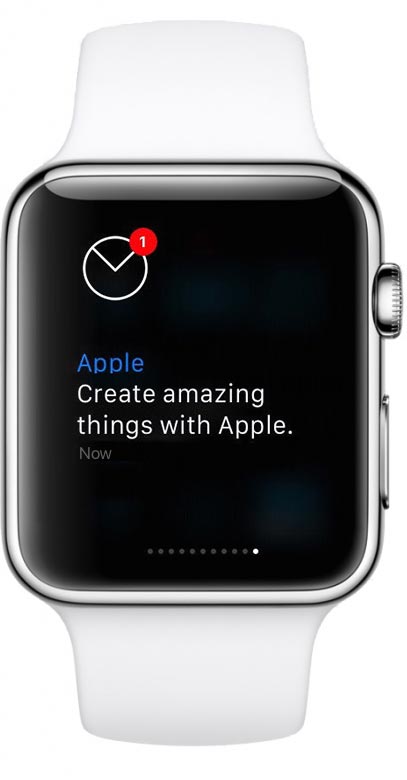
Get notified that you have email when you get email, Airmail can even provide notifications on your Apple Watch. If you need privacy then use local notifications, or if you get a lot of email then switch to VIP notifications and choose your VIPs. Limit work email to just work time. Or use the smart inbox to limit the notifications you get.
Choose a different sound for each email account if you like, and make the most of notifications by performing actions with them. You can also choose if you would prefer for your notifications to be grouped or ungrouped - see every email notification individually or as a collection of “new email” notifications, the choice is yours.

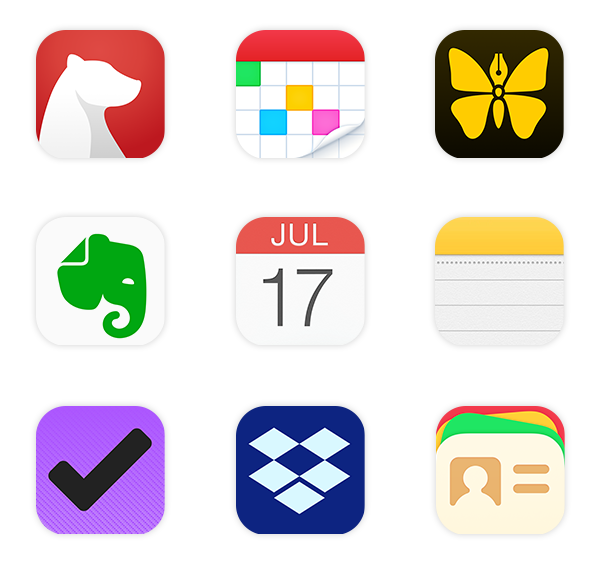
Whether you use Todoist or OmniFocus, Fantastical or Calendar 5, Dropbox or OneDrive, you can integrate Airmail into your workflows. Just enable the apps you want and then you can share emails with just a click or a tap.
If you want to simplify your email workflow then custom actions can help you do that. Combine steps into a custom action which you can then execute at any time. Do you want to apply a label, forward, and then archive your email with just a click or a tap? You can do it with custom actions. . .